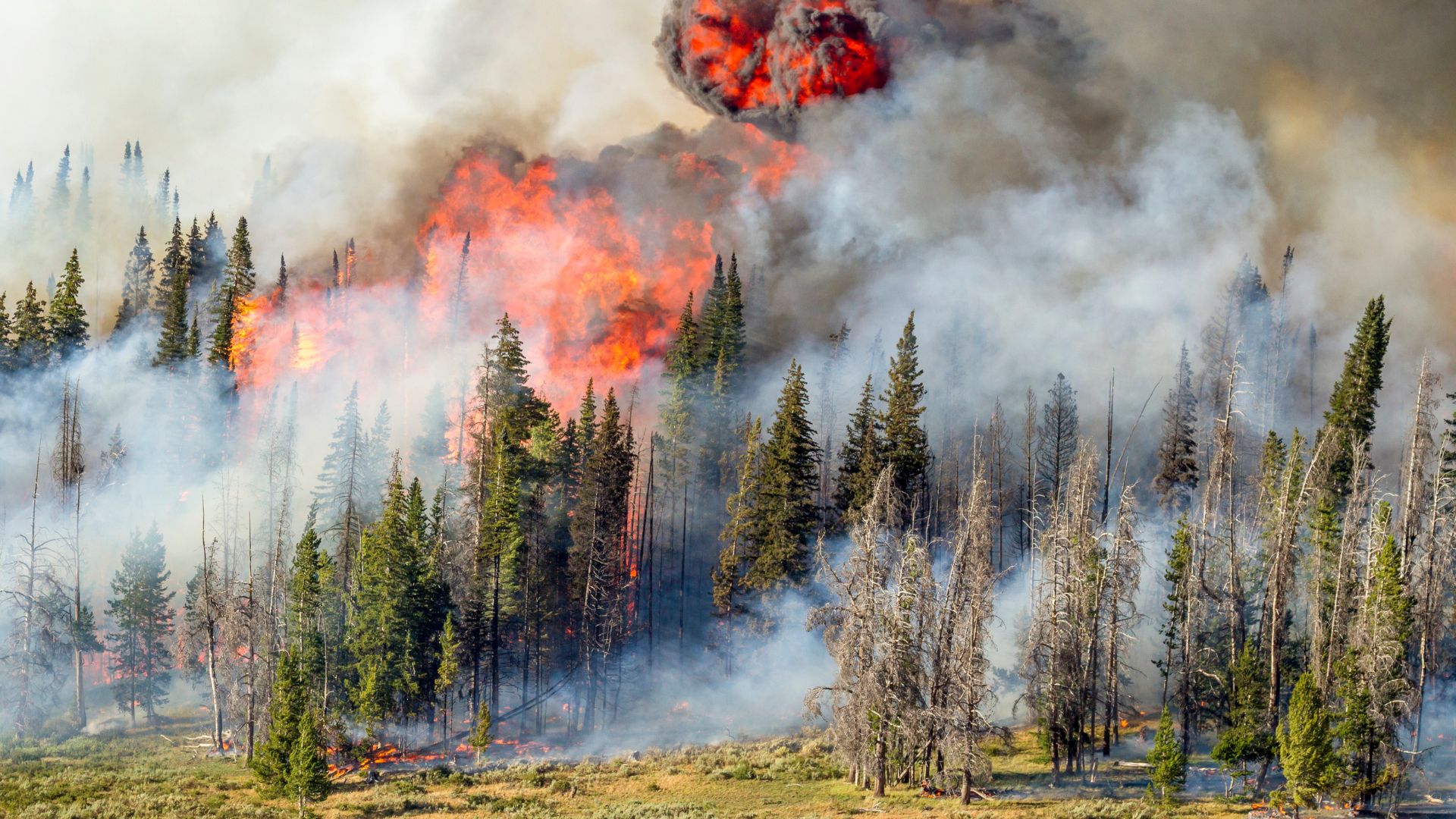
Wildfire risk does not automatically diminish land value in Idaho. Instead, it shapes how land should be evaluated, managed, and positioned for long-term performance. For investors and brokers, returns are influenced less by whether a property sits in a fire zone and more by how intentionally wildfire risk is addressed through planning, access, and ongoing stewardship.
Table of Contents
What does wildfire risk actually mean for Idaho land investors?
Wildfire risk is driven by a combination of fuel conditions, terrain, weather patterns, and human activity. In areas like McCall, Cascade, and parts of the Treasure Valley foothills, much of the land lies within the Wildland Urban Interface, where forests and development overlap.
This is a common reality across Idaho. It does not make land undesirable, but it does shift the focus to fundamentals. Buyers, lenders, and insurers look closely at forest density, road access, defensible space, and emergency response infrastructure. Properties with documented mitigation and active management are often viewed as more predictable and resilient than unmanaged parcels with similar location and terrain.
How do insurers evaluate wildfire risk in Idaho?
Insurers tend to look beyond broad wildfire maps and focus on site-specific conditions. While state and federal data provides useful context, underwriting decisions increasingly hinge on what is actually in place on the ground.
Common considerations include:
- Road access that meets fire code standards
- Multiple ingress and egress routes
- Fuel reduction around roads and future structures
- Water availability for suppression
- Clearly defined, long-term maintenance plans
In higher elevation markets around McCall, insurers often differentiate between unmanaged timberland and properties supported by formal fire protection planning and enforceable mitigation standards.
Can fire-resilient planning support long-term land value?
Yes, when that planning is substantive and enforceable. Fire-resilient design does not remove risk entirely, but it can significantly reduce uncertainty over time. Investors benefit when mitigation is embedded into land design rather than deferred to future owners.
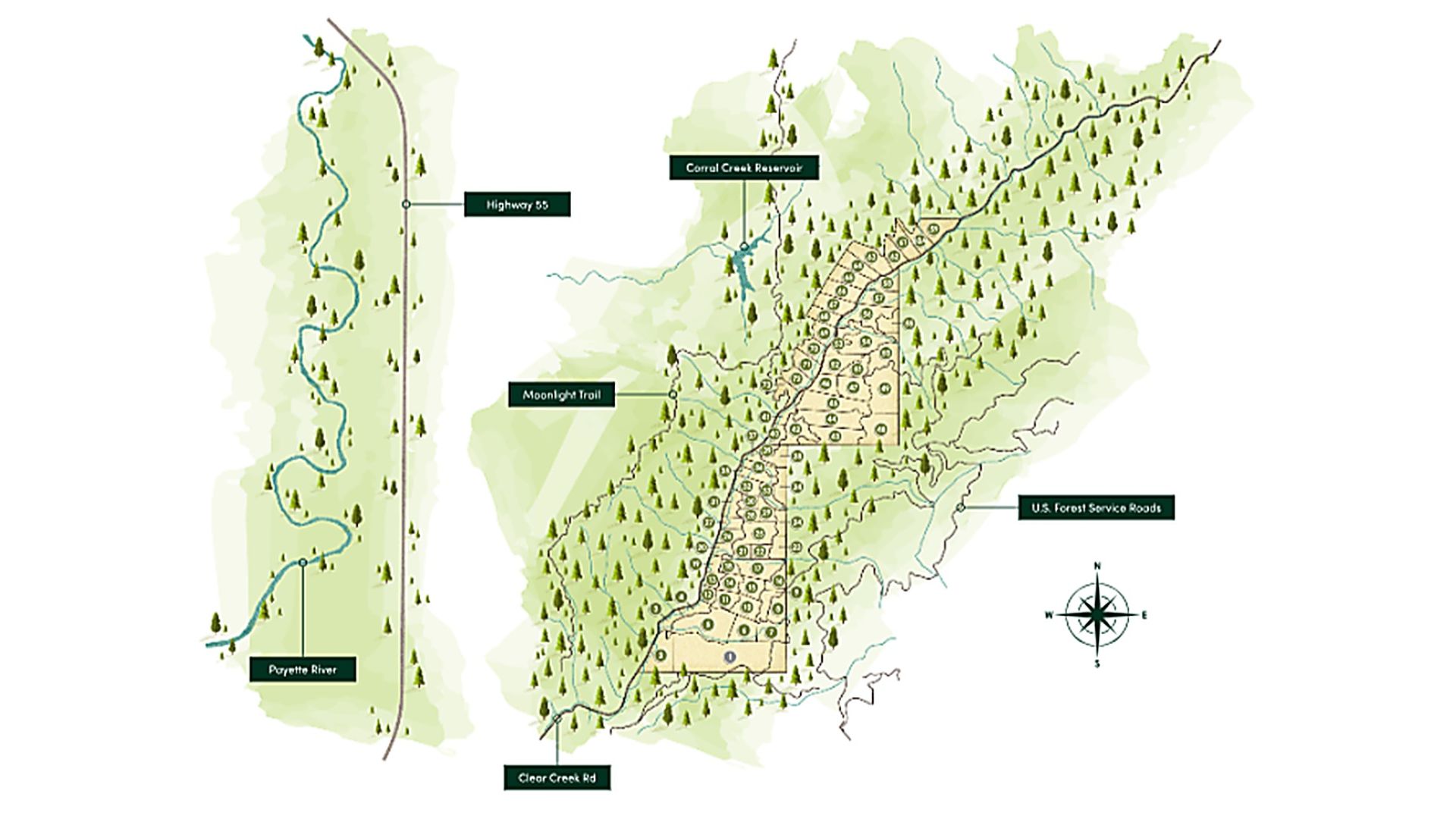
At Red Ridge Village near McCall, DF Development integrated a comprehensive Wildland Urban Interface Fire Protection Plan directly into the entitlement process. The plan documents existing forest health, identifies low to moderate hazard conditions, and outlines phased mitigation before vertical construction begins. It addresses shaded fuel breaks, defensible space standards, internal road networks designed to fire code, underground utilities to reduce ignition risk, and long-term maintenance coordinated with local fire agencies.
From an investment standpoint, this level of planning provides clarity and reduces downstream uncertainty for buyers, insurers, and lenders.
What land characteristics reduce wildfire exposure in practice?
Across Idaho fire zones, certain characteristics consistently support wildfire resilience.
These include:
- Lower residential density paired with meaningful open space
- Managed forests with reduced ladder fuels
- Road networks that double as access corridors and fuel breaks
- Terrain that limits continuous fuel runs
- Active coordination with local fire districts and timber protection associations
In markets like Cascade and McCall, properties that preserve large, actively managed open spaces often demonstrate stronger long-term performance than fragmented parcels without a defined management approach.
How should brokers and investors underwrite wildfire risk?
Wildfire risk should be evaluated the same way as water access or zoning. It requires documentation rather than assumptions. Best practice includes reviewing fire protection plans, understanding ongoing maintenance obligations, and confirming compliance with applicable fire codes and Firewise principles.
Land with clear mitigation pathways already in place is typically easier to price, easier to insure, and better positioned for long-term stability than land where fire planning is undefined.
The real takeaway for Idaho land investors
Wildfire risk is part of investing in Idaho, not a dealbreaker. Investors who understand fire planning, infrastructure, and long-term land management are better equipped to separate real exposure from perceived risk. The strongest land assets are those designed to work with Idaho’s forests rather than push against them.
At DF Development, wildfire planning is considered early and integrated into how land is evaluated and developed. If you are assessing Idaho land and want a clearer picture of how wildfire risk is being addressed, our team is available to walk through the planning, documentation, and long-term management considerations that matter.