
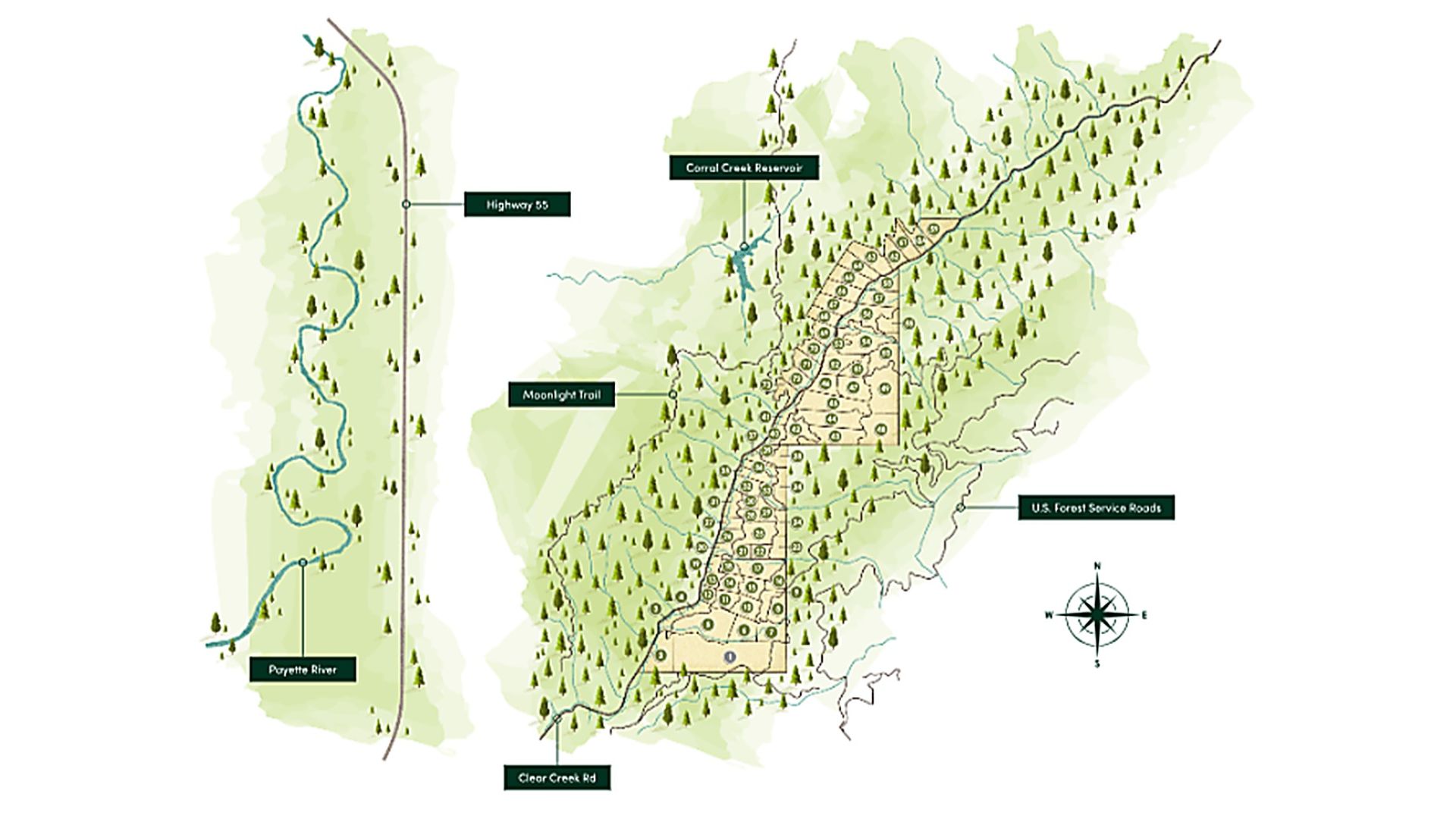
Idaho real estate transactions involving land in the McCall and Cascade area require a different level of preparation than a standard residential sale. Valley County zoning designations, conservation overlays along the Payette River corridor, and subdivision rules all shape what a buyer can do with a parcel. Realtors who understand these layers close better transactions and protect their clients from costly surprises after due diligence.
Table of Contents
Idaho's Land Use Framework Starts at the County Level
Under the Local Land Use Planning Act, Title 67 Chapter 65 of Idaho Code, every Idaho county administers its own comprehensive plan, zoning ordinance, and subdivision regulations. There is no statewide zoning code.
In the McCall and Cascade area, Valley County rules apply, reflecting the county’s priorities around natural resource protection, recreational access, and managed growth near Payette Lake and along the Payette River drainage. Agricultural, Rural Residential, Forest, and Recreation designations each carry different density allowances and permitted uses. A parcel zoned Forest in neighboring Adams County may look similar on paper to one in Valley County, but carry entirely different restrictions.
What Realtors Need to Watch For in Valley County Transactions
Several regulatory factors regularly affect Idaho land for sale in the McCall and Cascade corridor. Clients should understand each of them before making an offer.
- Conservation and riparian overlays. Valley County applies overlay standards along the North Fork and South Fork of the Payette River. These restrict where structures can be placed and how land can be disturbed, regardless of base zoning.
- Subdivision thresholds. Under Idaho Code Section 67-6511, divisions into five or fewer parcels typically qualify for simplified minor land division review. Divisions creating more than five parcels trigger full subdivision review, including public hearings and infrastructure requirements.
- Legal access. Many rural parcels in Valley and Adams Counties have access only via easement or unmaintained county roads. Confirming legal, year-round access is essential in every transaction.
- Water rights. Idaho follows the prior appropriation doctrine. Water rights are separate from land title and must be verified independently. Parcels without adjudicated water rights may have limited development potential regardless of zoning.
Frequently Asked Questions
Do Idaho counties have to follow a statewide zoning code?
No. Each Idaho county adopts its own zoning ordinance under the Local Land Use Planning Act. Valley County standards around McCall and Cascade differ from neighboring Adams County and from counties elsewhere in the state. County-specific research is required on every rural Idaho real estate transaction.
What is a conservation overlay and how does it affect a land purchase near McCall?
A conservation overlay adds a layer of standards on top of the base zoning. In Valley County, riparian and floodplain overlays along the Payette River watershed restrict development setbacks and land disturbance. A parcel may appear buildable based on its base zone and still face significant restrictions under an overlay. Realtors should identify all overlay districts as part of standard due diligence on Idaho land for sale in this area.
More Resources for Idaho Realtors
DF Development works with realtors and buyers across the McCall and Cascade corridor. These resources are built for professionals working in Idaho land transactions: