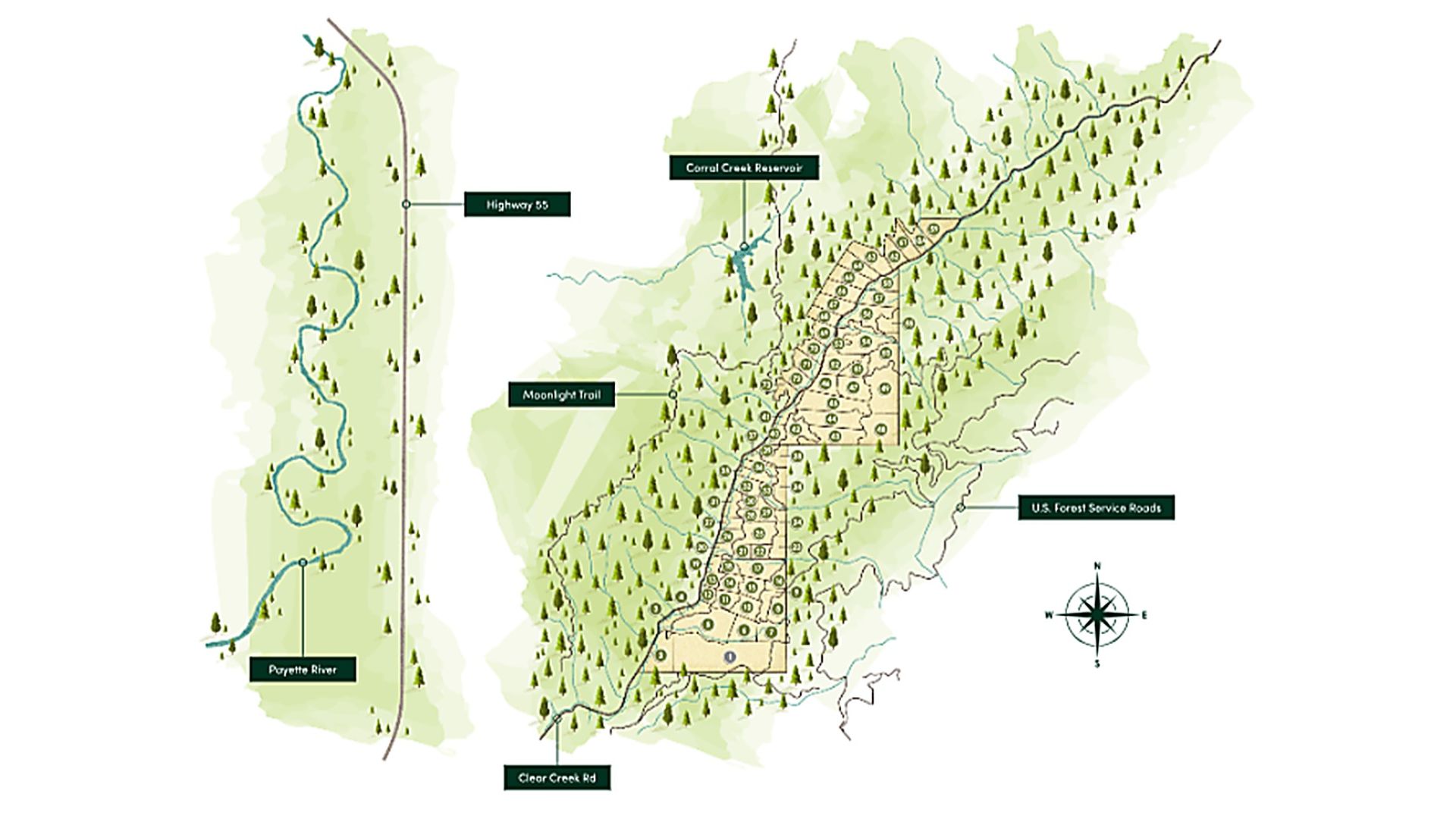

Idaho’s recreation and legacy ranch market is attracting a broader and more strategic buyer base than it did even a few years ago. Investors and brokers focus on properties that offer long-term flexibility, reliable fundamentals, and multiple use paths rather than short-term speculation. This investor insight addresses a core question. What signals should investors and agents watch to identify growth opportunities in Idaho’s recreation and ranch land market?
Table of Contents
What is driving demand for ranch properties in Idaho?
Population movement continues to shape Idaho’s land market. Recent data on Idaho rural population growth driven by migration shows that net in-migration remains a primary contributor to population increases in rural counties. Recreation and ranch properties are closely tied to rural land use patterns, access, and long-term ownership trends.
At the same time, broader land value fundamentals remain supportive. According to USDA farmland value trends and land use data, farmland values continue to increase, reinforcing land’s role as a long-horizon asset. While recreation and ranch properties are not purely agricultural, these trends provide an important valuation backdrop for investors underwriting land over multi-year cycles
What should investors look for in a recreation or ranch acquisition?
Investors should start by considering constraints that impact long-term usability rather than surface appeal.
Access is foundational. Year-round legal access and maintainable roads often determine whether a property functions as a usable asset or a complicated holding.
Water features and water rights materially affect value and use. Review surface water, irrigation potential, and documentation early in the diligence process.
Adjacent land context matters. Proximity to public land can enhance recreation appeal but may introduce seasonal access and management considerations. Evaluating how a property operates during peak use periods is critical.
Operational flexibility separates strong assets from marginal ones. Properties that support recreation, grazing, stewardship, or future homesites tend to retain value more consistently over time.
How can agents and brokers position these properties for qualified buyers?
Brokers and agents create value by helping buyers underwrite reality, rather than relying on marketing narratives.
Clarifying intended use early is essential. Buyer priorities, such as recreation, legacy ownership, agricultural use, or future development planning, shape how the property should be evaluated and presented.
Diligence documentation should be concise and complete. Brokers and agents should summarize access, water, infrastructure, and county-level considerations clearly to support informed decision-making.
Framing ownership as a long-term hold is increasingly important. Many buyers secure land now while planning improvements later. Agents who can explain what ownership looks like between purchase and future development help reduce friction and uncertainty.
What does investor insight mean for statewide growth opportunities?
Heading into 2026, buyers are evaluating Idaho land with a stronger emphasis on ownership readiness rather than acquisition speed.
Buyers are asking more detailed questions earlier in the process, particularly around seasonal access, land management responsibilities, and long-term usability. This reflects a shift toward more deliberate ownership decisions and a reduced tolerance for ambiguity.
For brokers, this means that clarity and documentation matter more than urgency-based messaging.
Investor Insight FAQ
What is the most important investor insight for Idaho recreation and ranch land?
Usability matters more than aesthetics. Access, water, and constraints often determine long-term value.
Do migration trends still influence Idaho land buyers?
Yes. Recent research on Idaho rural population growth confirms migration remains a major driver of demand.
Do farmland value trends matter for recreation and ranch investing?
They provide context. USDA data shows farmland values continue to rise, supporting long-term land ownership strategies.
What should agents provide to serious land buyers?
Clear diligence summaries covering access, water, infrastructure, and realistic use scenarios.